


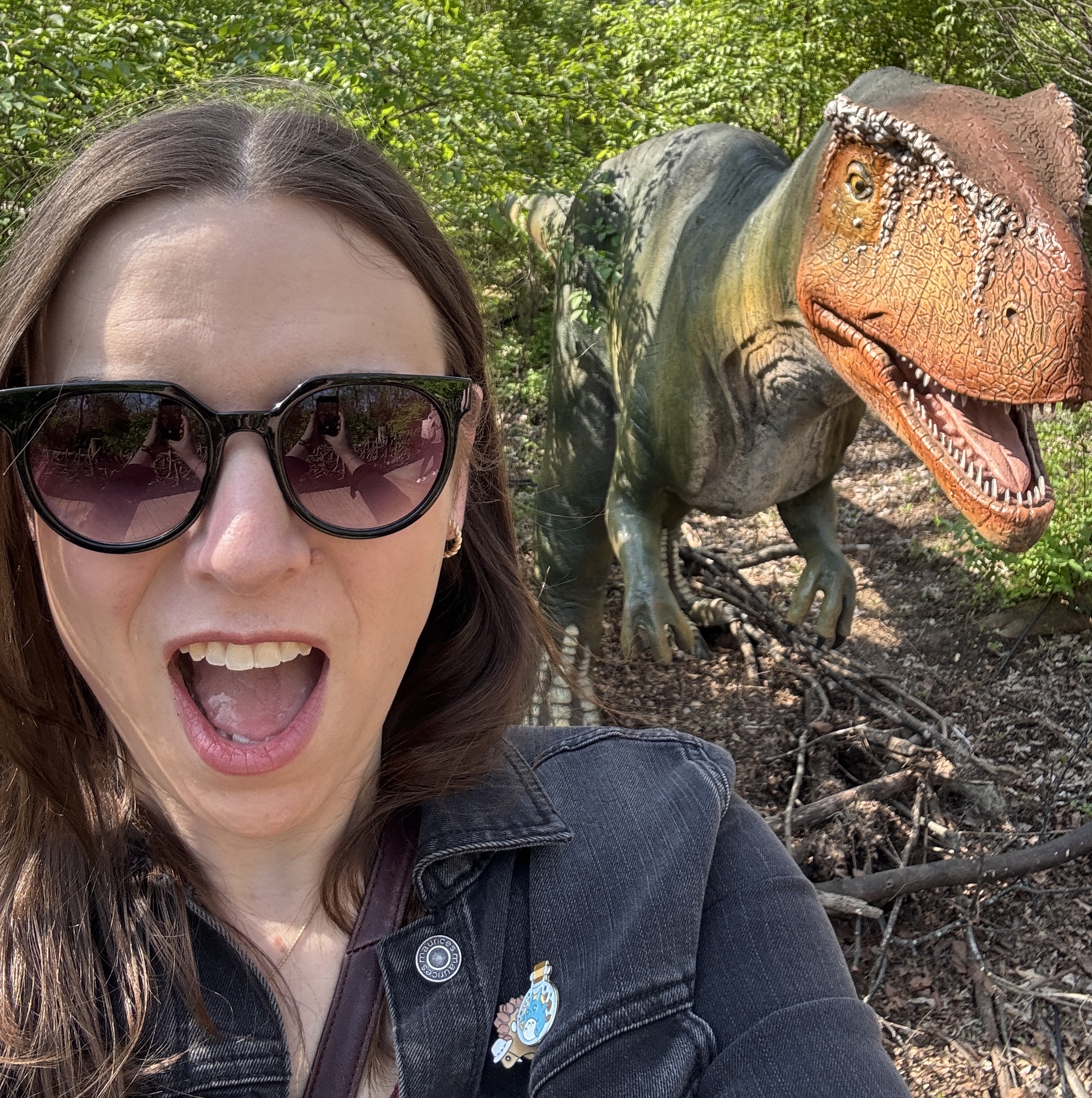
Welcome to the first of a new blog series where I interview the amazing clinicians here at NOATC! I'd say there's no one better to start us on this journey than one of our newest clinicians, Rachel Brann, LCSW! I'd like to thank Rachel for being my interview test subject and knocking it out of the park. If you'd like to schedule a session with Rachel, you can get in contact with us here!
What inspired you to go into this field?
Honestly, my own experience with OCD. I was diagnosed later in life, and that diagnosis opened the door to evidence-based treatment that genuinely changed my life. It helped me understand the intricacies of my brain and why I could get stuck in endless loops, overanalyze seemingly insignificant decisions, and feel like every choice I made was a referendum on my moral goodness or worth as a person. I also experience social anxiety, which improved significantly with exposure and response prevention therapy. I learned that being willing to sit with uncertainty about how other people perceive me could open so many doors. I could trust myself and my decisions more, take meaningful risks, and develop a greater sense of self-acceptance.
I always knew I wanted to help people in some capacity, which led me to pursue my undergraduate degree in social work. But after experiencing the impact of OCD treatment, I knew this was exactly how I wanted to do that. Everyone deserves the opportunity to understand themselves, make sense of their inner experiences, and develop tools to navigate the difficult parts of being human.
What is your favorite part of being a therapist?
My favorite part of this work is helping people learn to trust themselves. I love watching people build confidence, embrace their imperfections, and realize they don’t have to feel ready or confident to take steps toward what matters to them. There’s something special about watching someone do something they once thought was impossible and discover they’re more capable than they realized. My hope is to help people approach their thoughts and emotions with greater compassion and acceptance, rather than feeling like they have to fight or fix every uncomfortable experience.
Ultimately, I want to help people build meaningful lives that aren’t centered around avoiding discomfort. The goal isn’t to never struggle, but to trust yourself to navigate the hard moments and keep moving toward the life you want to live.

You've worked in different levels of care (e.g., PHP/IOP). What was it like transitioning to traditional outpatient work?
I absolutely loved my experience in PHP and IOP, where I spent four years working closely with clients experiencing significant functional impairment related to OCD and anxiety. I worked with about eight clients at a time, spending six hours a day with them over an average of eight weeks. You get to know someone pretty well when you're spending that much time together!
I really valued that work, but I wanted the opportunity to continue supporting people beyond those periods of intense impairment. I wanted to help clients not only get back on their feet, but also build lives they genuinely wanted to live, grounded in their values. I'll admit, I worried that outpatient work might feel less fulfilling after the intensity of PHP, but that has been far from my experience. I still see some clients four times a week through our intensive program, which gives me that same opportunity to dig our heels in and make progress more quickly. I also love the rhythm of traditional outpatient work: being a consistent source of support, encouragement, structure, and guidance as people navigate life's many twists and turns. One of the most rewarding parts is watching clients take what we've worked on together and apply it in their own lives, at their own pace. There's something empowering about realizing that you're the one making these changes. I'm there to support the process, but they're the ones doing the hard, meaningful work.
How has being a therapist influenced your life outside of work?
Oh man, in so many ways! As someone who experiences OCD and social anxiety, many of the skills I teach my clients are skills I'm actively practicing in my own life. I've become more self-compassionate, more willing to sit with discomfort, and more accepting of my imperfections. We are all human and there are certainly still times when I have trouble putting skills into practice that I know intellectually. Knowing something and being able to do it when your brain is sounding the alarm are two very different things!
I've also become better at setting boundaries, trusting myself, and intentionally putting myself in uncomfortable situations rather than automatically avoiding them. It's been a good reminder that growth doesn't require us to have everything figured out first.
And apparently, being a therapist makes strangers feel comfortable asking you surprisingly personal questions. So there's that too!
What's a time in your life that your therapy skills helped you through something?

As an OCD therapist who also has OCD, I sometimes find that my clients’ struggles become the very things my own brain latches onto. A client once shared that they couldn’t stop thinking about their blinking. Immediately, I felt that familiar rush of anxiety and knew my sticky brain had found something to grab onto. For the next week, I became hyperaware of my own blinking, to the point that it felt like the only thing I could think about. It made me fantasize about being able to crawl out of my brain.
Eventually, I started practicing what I teach my clients. Rather than trying to make the awareness go away, I practiced changing my relationship with it. I allowed it to be there, accepted that my attention might get pulled toward it, and gently returned my focus to what was happening around me. Not urgently, not perfectly, and without needing to make the discomfort disappear first. Over time, I felt a sense of freedom, not because I gained control over my thoughts or attention, but because I stopped making that control the goal.
It was a reminder that acceptance means making room for the experiences we cannot fully control while choosing where to place our energy and attention. We don’t have to win a battle with our minds to get back to living our lives.
Your bio says you like to get competitive at estate sales. What's one of your favorite things you've ever scored from one?
Ooooh, this is a great question. My all-time favorite score was a pair of mid-century modern dressers. The house was themed around mermaids and had easily 3,000 mermaid-related items: mermaid clocks, a shell-shaped couch, an oyster coffee table.I wish I could have met the person who lived there. Nestled among all this mermaid decor were these beautiful modular teak dressers. I bought them, drove off to find a U-Haul, and then my partner and I muscled them into the van.
Which one would you give up for life: seltzer, Diet Coke, or coffee?
Seltzer, for sure. It's great, but it simply doesn't hit the same.Coffee is so essential that sometimes I wake up just for it.Diet Coke is the perfect treat and once I found out that clinicians at NOATC had a communal Diet Coke drawer, I knew I would be right at home.
Is there any advice you'd give to anyone reading this who is currently struggling with OCD or anxiety?
Remember your values and your humanness. You’re allowed to be imperfect, have uncomfortable thoughts, and experience uncertainty while still living a meaningful life. Your thoughts aren’t facts, and your feelings aren’t always instructions you need to follow. You don’t have to resolve every doubt or find certainty before moving forward.
OCD and anxiety can make uncertainty feel unbearable, but you can learn to relate to these experiences differently. Your life isn’t defined by every thought or feeling, but by how you choose to spend your time, energy, and attention. If you are struggling, you are not alone and you deserve support. Fortunately, there are highly effective treatments for OCD and anxiety related disorders, and you don’t have to navigate them alone.


